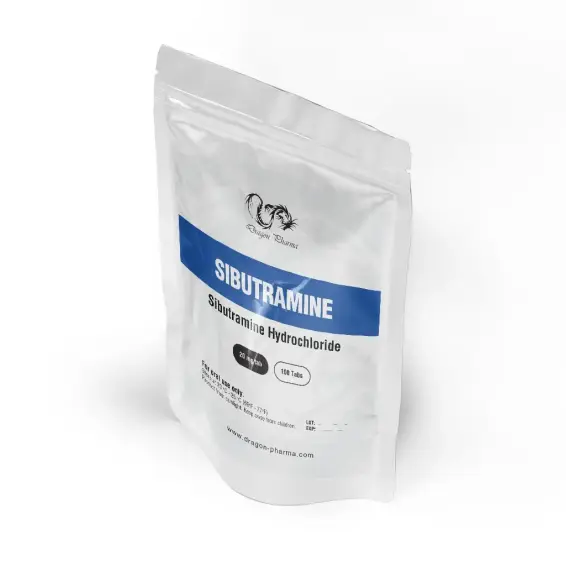
Sibutramine HCl 20mg by Dragon Pharma
Sibutramine Hydrochloride is Dragon Pharma's formulation at 20mg per tablet — a serotonin-norepinephrine reuptake inhibitor (SNRI) developed as a weight management medication, originally marketed as Meridia in the US and Reductil in Europe. Supplied in a 100-tablet pack, Sibutramine reduces appetite and increases satiety through central monoamine reuptake inhibition — a different mechanism from GLP-1 agonists, beta-2 agonists and thyroid hormones.
Also searched as: Sibutramine 20mg, Meridia, Reductil, appetite suppressant SNRI, Sibutramine Dragon Pharma.
What Sibutramine Is — SNRI Mechanism Explained
Sibutramine is most accurately understood as a centrally acting SNRI — the same drug class as antidepressants like Venlafaxine and Duloxetine — repurposed for weight management through appetite suppression:
- Sibutramine inhibits the reuptake of serotonin (5-HT) and norepinephrine (NE) in the brain — increasing the availability of these neurotransmitters in synaptic gaps
- Elevated serotonin contributes to satiety signalling in the hypothalamus — food intake decreases as the brain receives stronger "full" signals after smaller amounts of food
- Elevated norepinephrine contributes to thermogenesis (via beta-3 adrenergic receptor activation in adipose tissue) and reduced appetite through central sympathomimetic activity
- Sibutramine itself is a prodrug — its two primary active metabolites (M1 and M2, desmethyl and didesmethyl sibutramine) are the pharmacologically active compounds, with half-lives of approximately 14 and 16 hours respectively. These active metabolites are what produce the sustained appetite suppression throughout the day
The Regulatory History — Why Sibutramine Was Withdrawn
This is essential context for any user and a genuine information gap in most competitor content:
- Sibutramine was approved for weight management in the US (as Meridia) in 1997 and marketed widely through the 2000s, achieving significant prescription volume
- In 2010, the SCOUT trial (Sibutramine Cardiovascular OUTcomes trial) — a large randomised controlled trial in approximately 10,000 overweight patients with pre-existing cardiovascular disease — found that Sibutramine users had a significantly higher rate of non-fatal heart attack and non-fatal stroke than placebo (11.4% vs 10.0%)
- As a result, Abbott Laboratories voluntarily withdrew Meridia from the US market in 2010; the European Medicines Agency similarly recommended suspension of marketing authorisation in Europe
- Critical context: the SCOUT trial specifically enrolled patients with pre-existing cardiovascular disease — the risk profile in otherwise healthy individuals without CVD history is less clearly established by this data. However, the norepinephrine reuptake inhibition mechanism (increasing heart rate and blood pressure) provides a plausible biological basis for cardiovascular concern regardless of baseline risk
AAS Users — The Blood Pressure Interaction
A specific consideration for the Dragon Pharma audience that most competitor content does not address:
- Many AAS — particularly testosterone at higher doses, Trenbolone, and oral compounds like Dianabol — raise blood pressure through multiple mechanisms including red blood cell elevation, fluid retention and direct vascular effects
- Sibutramine's norepinephrine reuptake inhibition also elevates blood pressure and heart rate through central sympathomimetic activity
- Running Sibutramine concurrent with AAS compounds that already elevate blood pressure compounds this effect — blood pressure should be monitored closely if this combination is used
- Sibutramine is most appropriately used during cutting phases where AAS use is typically lower-dose and less blood-pressure-elevating — running it during high-dose testosterone or Trenbolone cycles carries compounded cardiovascular risk
Sibutramine vs Other Weight Management Compounds in the Dragon Pharma Range
| Compound | Mechanism | Primary Effect | Best For |
|---|---|---|---|
| Sibutramine | SNRI — serotonin + norepinephrine reuptake inhibition | Appetite suppression, satiety enhancement | Caloric deficit adherence; reducing hunger during cutting |
| Tirzepatide | GLP-1/GIP dual agonist | Appetite reduction, gastric emptying delay | Significant weight reduction — strongest clinical data |
| Clenbuterol | Beta-2 agonist — thermogenic | Metabolic rate increase, fat oxidation | Thermogenic fat loss + lean mass preservation |
| T3 (Liothyronine) | Thyroid hormone — metabolic acceleration | BMR increase, nutrient turnover acceleration | Most potent metabolic rate elevation; requires AAS protection |
Effects and Benefits
- Appetite suppression — reduced hunger and increased satiety from meals, supporting caloric deficit adherence
- Mild thermogenic effect — norepinephrine elevation contributes to modest BMR increase
- Improved dietary compliance — the primary practical benefit is making caloric restriction more sustainable for users who struggle with hunger on aggressive deficits
- No hormonal effects — no testosterone suppression, no estrogen effects, no PCT required
Dosage and Administration
| Protocol | Dose | Timing |
|---|---|---|
| Standard | 10–15 mg/day | Morning with or without food |
| Higher dose (this tablet) | 20 mg/day | Morning — full 20mg tablet |
At 20mg per tablet, Dragon Pharma's formulation is at the higher end of Sibutramine's clinically studied dose range — original pharmaceutical protocols typically started at 10mg with escalation to 15mg if tolerated. The 20mg tablet can be split for users starting conservatively. Morning dosing is preferred to allow the active metabolites to decline through the evening and minimise sleep disruption from the norepinephrine component.
Side Effects
- Elevated blood pressure and heart rate — the primary safety concern; blood pressure monitoring throughout use is strongly recommended
- Dry mouth, constipation and insomnia — class effects of sympathomimetic and SNRI activity
- Headaches — common at initiation, typically subsides
- Users with cardiovascular disease, hypertension or arrhythmia history should not use Sibutramine — the SCOUT trial cardiovascular findings are the basis for this contraindication
- Do not combine with other serotonergic compounds (SSRIs, other SNRIs) — risk of serotonin syndrome
"Sibutramine 20mg is formulated at the maximum studied clinical dose — its SNRI mechanism produces appetite suppression and mild thermogenesis through central monoamine reuptake inhibition, with blood pressure monitoring essential given its cardiovascular profile."
Storage and Handling
Store Sibutramine at room temperature, away from direct sunlight and moisture. Keep the original packaging sealed until use.