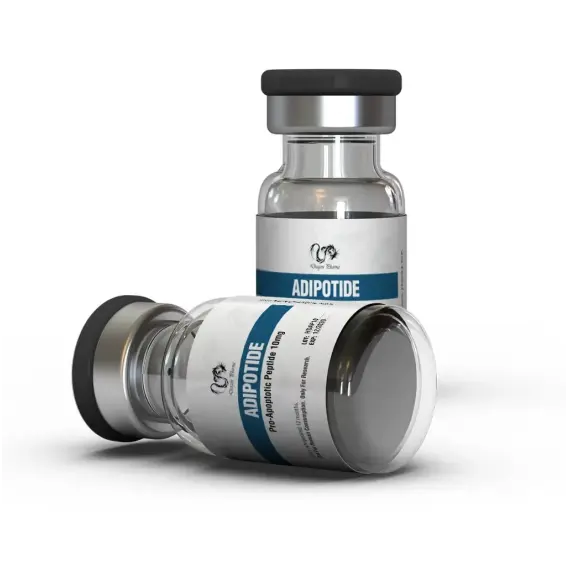
Adipotide (FTPP) — Fat-Targeted Proapoptotic Peptide by Dragon Pharma
Adipotide (FTPP — Fat Targeted Proapoptotic Peptide) is Dragon Pharma's formulation of the prohibitin-targeting proapoptotic peptide at 10mg per vial — a compound that operates through a fundamentally different mechanism than any other fat loss compound available: targeted destruction of the blood vessels feeding white adipose tissue, causing adipocytes to die through ischemia-induced apoptosis. Developed at MD Anderson Cancer Center by Wadih Arap and Renata Pasqualini, Adipotide produced approximately 39% body fat reduction in obese rhesus macaques over 4 weeks — results without parallel among fat loss compounds. It also carries a documented kidney toxicity risk at higher doses that requires honest discussion.
Also searched as: Adipotide 10mg, FTPP peptide, fat targeted proapoptotic peptide, prohibitin peptide fat loss, Adipotide Dragon Pharma.
Why Adipotide Is Categorically Different From All Other Fat Loss Compounds
To understand Adipotide, it is essential to understand what it does that no other fat loss compound does:
- Every other fat loss compound in the Dragon Pharma range — Clenbuterol (beta-2 agonist lipolysis), Yohimbine (alpha-2 antagonist), AOD-9604 (GH fragment), T3 (thyroid metabolism), GLP-1 agonists (appetite suppression), AICAR (AMPK fat oxidation), AOD (fat fragment) — works through metabolic regulation, appetite control, or enhancement of existing fat oxidation pathways. They make the body more efficiently burn fat that is already there
- Adipotide does not regulate fat metabolism — it kills the fat cells themselves. Specifically, it kills the endothelial cells of the blood vessels that supply blood to white adipose tissue, causing the fat cells to die from loss of blood supply
- This is a fundamentally destructive rather than metabolic mechanism — closer in principle to how certain chemotherapy approaches target tumour vasculature than to conventional fat loss compounds
- The result, in animal models, is permanent reduction of the fat depot — not mobilisation of fat that will return when the compound is stopped, but actual loss of adipose tissue that does not readily regenerate
The Prohibitin Mechanism — How Adipotide Targets Fat Vasculature
Adipotide's targeting specificity comes from prohibitin:
- Prohibitin is a protein found on the surface of endothelial cells specifically in the blood vessels of white adipose tissue — it is expressed at high levels in the vasculature supplying fat deposits, particularly visceral and subcutaneous adipose tissue
- Adipotide consists of two functional domains: a targeting domain that binds prohibitin specifically on fat tissue endothelium; and a proapoptotic domain (KLAKLAK)2 that disrupts mitochondrial membranes in the cells it enters, triggering apoptosis
- After subcutaneous injection, Adipotide circulates systemically and the targeting domain directs it selectively to prohibitin-expressing endothelial cells in fat vasculature. The proapoptotic domain then induces apoptosis specifically in those cells
- The fat depot endothelial cells die, the blood supply to the adipose tissue is disrupted, and the adipocytes themselves die from ischemia — a process of targeted vascular pruning that eliminates the fat tissue's blood supply and causes its death
The Primate Study — The Most Dramatic Fat Loss Data
The rhesus macaque study (Barnhart et al., Science Translational Medicine, 2011) is the scientific foundation of Adipotide's profile:
- Obese male rhesus macaques were treated with Adipotide for 4 weeks. Results: approximately 39% reduction in body fat mass, approximately 27% reduction in body weight, and significant improvements in insulin sensitivity and fasting glucose
- The speed and magnitude of fat loss in this primate model — non-human primates whose physiology closely approximates human obesity — is without precedent in the fat loss literature. No metabolic compound produces 39% fat mass reduction in 4 weeks
- Critically: kidney toxicity was observed. Animals showed elevated creatinine and BUN (blood urea nitrogen) indicating impaired kidney function, which resolved after treatment was stopped in most cases but represents a genuine safety signal
- No human clinical trials of Adipotide for obesity have been completed — this primate data, while remarkable, is not a human trial and does not establish human efficacy or a confirmed safe human dose
Adipotide vs Other Fat Loss Compounds — The Mechanism Comparison
| Compound | Mechanism | Fat Effect | Reversible? |
|---|---|---|---|
| Adipotide | Adipose vasculature apoptosis | Adipocyte death via ischemia | Largely irreversible — adipocytes eliminated |
| Clenbuterol | Beta-2 agonist lipolysis | Releases fatty acids from adipocytes | Fully reversible — fat cells remain |
| Tirzepatide | GLP-1/GIP appetite suppression | Reduced intake → metabolic fat loss | Reversible — regain without continued use |
| Helios | Beta-2 + alpha-2 local lipolysis | Localised fat mobilisation | Reversible |
| AOD-9604 | GH fragment lipolysis | Enhanced fat oxidation | Reversible |
The Kidney Toxicity Warning — Critical Safety Information
This is the most important safety consideration with Adipotide:
- In the rhesus macaque study, kidney toxicity was observed at the doses used — elevated creatinine and BUN indicating impaired renal function during treatment. While this largely resolved on cessation, it represents a genuine dose-dependent toxicity signal
- The mechanism of kidney toxicity is proposed to relate to prohibitin expression in renal tubular cells — the same targeting mechanism that directs Adipotide to fat vasculature may also affect kidney tissue where prohibitin is expressed
- Users with pre-existing kidney impairment should not use Adipotide. All users should monitor kidney function (creatinine, BUN, urine output) during use
- No established safe human dose exists — doses used in performance context are extrapolated from primate studies with dose adjustments for body surface area, without human clinical data confirming safety
Effects and Benefits
- Targeted adipose tissue reduction through prohibitin-mediated vascular apoptosis
- ~39% body fat reduction over 4 weeks in obese primate model — the most dramatic fat loss data in the research peptide literature
- Improved insulin sensitivity — documented alongside fat loss in primate study
- Mechanism independent of diet, exercise or metabolic state — works regardless of caloric intake
- No testosterone suppression — no PCT required
Dosage and Administration
| Protocol | Dose | Frequency | Notes |
|---|---|---|---|
| Research protocol (extrapolated) | 100–250 mcg/kg/day | Daily SubQ | Kidney function monitoring essential; 4-week maximum course |
At 10mg per vial and extrapolated primate doses, conservative daily dosing is in the 100-250mcg/kg range — a 80kg user at 100mcg/kg would use 8mg/day. No established human protocol exists. Kidney function monitoring (creatinine at minimum) before, during and after any use is non-negotiable given the primate safety signal. Reconstitute with bacteriostatic water. Store refrigerated at 2-8°C after reconstitution.
Side Effects
- Kidney toxicity — the primary documented safety concern; dose-dependent; monitor creatinine and BUN throughout use
- Dehydration and thirst — observed in primate study alongside kidney effects; maintain adequate hydration
- Potential weight loss pace — the rapid adipose reduction may outpace the body's ability to adapt; monitor electrolytes
- No hormonal effects — no testosterone suppression, no PCT required
Related Compounds
- AOD-9604 — metabolic fat loss via GH fragment; safer profile; no kidney concerns; works through conventional lipolysis enhancement rather than adipocyte elimination
- Tirzepatide — GLP-1/GIP appetite suppression; extensive Phase III human data; reversible; for users wanting evidence-based fat loss with established human safety
"Adipotide kills fat cells rather than mobilising them — targeted apoptosis of adipose tissue vasculature through prohibitin binding produces irreversible adipocyte elimination, not metabolic fat loss. The 39% primate data is remarkable; the kidney toxicity signal demands monitoring."
Storage and Handling
Store lyophilised Adipotide at room temperature or refrigerated. After reconstitution with bacteriostatic water, store refrigerated at 2-8°C and use within 28 days.