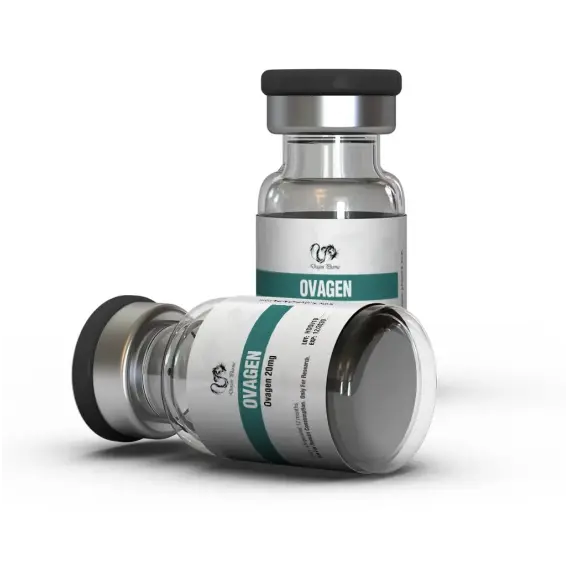
Ovagen — Liver and GI Bioregulator Tripeptide by Dragon Pharma
Ovagen (Glu-Asp-Glu) is Dragon Pharma's formulation of the hepatic and gastrointestinal Khavinson bioregulator tripeptide at 20mg per vial — the liver-targeted entry point in the Khavinson peptide bioregulator series. Developed at the St. Petersburg Institute of Bioregulation and Gerontology alongside Livagen (immune bioregulator) and other tissue-specific bioregulators, Ovagen specifically targets hepatocyte and gastrointestinal mucosal gene expression through the same epigenetic DNA demethylation mechanism shared by the Khavinson series — but with tissue specificity for liver and gut rather than immune tissue.
Also searched as: Ovagen peptide, Glu-Asp-Glu bioregulator, Ovagen liver peptide, Khavinson liver bioregulator, Ovagen Dragon Pharma.
Ovagen in the Khavinson Bioregulator Framework
Ovagen cannot be fully understood without understanding the broader Khavinson bioregulator framework:
- The Khavinson bioregulators are tissue-specific short peptides derived from organ extracts, each targeting the tissue from which they were derived. The tissue specificity is a defining feature — Ovagen (derived from liver/GI tissue) acts preferentially in hepatocytes and GI mucosa; Livagen (from lymphoid tissue) acts in immune cells; Epitalon (from pineal tissue) acts on the pineal axis
- All Khavinson bioregulators share the same proposed mechanism: direct interaction with DNA and chromatin in target tissue cells, promoting DNA demethylation of silenced gene promoters and restoring gene expression patterns that decline with age or tissue damage
- In the liver context: aging, chronic toxin exposure (including 17-AA oral AAS hepatotoxicity), viral hepatitis and fatty liver disease all produce epigenetic silencing of hepatocyte genes involved in detoxification, regeneration and cellular homeostasis. Ovagen's proposed action is to reverse this silencing — reactivating the gene expression programme of healthy, younger hepatocytes
Why Ovagen Is Specifically Relevant for AAS Users
This is the most directly AAS-relevant aspect of Ovagen and the information gap most competitor content leaves entirely unfilled:
- 17-Alpha Alkylated Oral AAS Hepatotoxicity: Oral 17-AA AAS — Dianabol, Winstrol, Anadrol, Superdrol, Halotestin, Oral Tren, M1T — produce hepatotoxicity through first-pass hepatic stress, cholestasis, and direct hepatocyte stress. ALT/AST elevation is rapid and pronounced. During and after oral AAS cycles, hepatocyte gene expression is disrupted — including genes involved in the detoxification, anti-inflammatory response and regeneration that hepatocytes rely on
- Ovagen's hepatoprotective mechanism addresses this at the epigenetic level — reactivating the silenced hepatocyte genes that AAS hepatotoxicity suppresses, potentially accelerating hepatic function recovery after cycles
- While conventional hepatoprotectants (TUDCA, UDCA, NAC, milk thistle) work through established antioxidant and bile salt pathways, Ovagen works at the gene expression level — a complementary and mechanistically distinct approach
- GI mucosal protection: Oral AAS and NSAIDs (often used by athletes) both damage GI mucosal layers. Ovagen's GI tissue specificity extends hepatic protection to the full upper GI tract — stomach and intestinal mucosal cell gene expression
Liver Protection Comparison — Conventional vs Ovagen
| Approach | Mechanism | Target | Relevant For |
|---|---|---|---|
| TUDCA/UDCA | Bile salt replacement; cholestasis reduction | Bile flow; mitochondrial protection | During oral AAS cycles — acute hepatotoxicity reduction |
| NAC (N-Acetyl Cysteine) | Glutathione precursor; antioxidant | Oxidative stress in hepatocytes | During/after cycles — ROS reduction |
| Milk Thistle (Silymarin) | Antioxidant; cell membrane stabilisation | Hepatocyte membrane integrity | Mild hepatoprotection; limited evidence for AAS-scale stress |
| Ovagen (Glu-Asp-Glu) | DNA demethylation in hepatocytes | Gene expression restoration | Post-cycle hepatic gene expression recovery; aging liver epigenetics |
| BPC-157 | Cytoprotective; nitric oxide; growth factor | GI and systemic tissue repair | GI healing; liver damage repair through cytoprotection |
The GI Tract Component
Ovagen's GI tract activity is its second major mechanism and rarely discussed:
- The GI mucosal lining — from oesophagus through stomach to intestine — is subject to rapid cell turnover and is highly sensitive to disruption from oral AAS, NSAIDs, alcohol, and dietary stress that AAS users experience
- Mucosal cells in the GI tract, like hepatocytes, show age-related epigenetic silencing of genes involved in mucus production, tight junction integrity and inflammatory regulation
- Ovagen's tissue affinity for GI mucosal tissue (from its organ-extract derivation) produces chromatin-level gene reactivation in these cells, potentially restoring the gene expression patterns that maintain mucosal barrier integrity and resistance to ulceration
Effects and Benefits
- Hepatocyte gene expression restoration via DNA demethylation — reactivation of detoxification, regeneration and homeostasis genes silenced by aging or toxic exposure
- Liver support during and after AAS cycles — targeted at the epigenetic level rather than through antioxidant or bile salt mechanisms
- GI mucosal protection and gene reactivation — extended benefit to the full upper GI tract
- Complementary to conventional hepatoprotectants (TUDCA, NAC) — different mechanism, additive rather than redundant protection
- No testosterone suppression — no PCT required
Dosage and Administration
| Protocol | Dose | Frequency | Duration |
|---|---|---|---|
| During oral AAS cycles | 100–200 mcg | Daily or every other day | Duration of oral AAS use |
| Post-cycle hepatic recovery | 100–200 mcg | Daily | 10–20 day course post-cycle |
| General liver health / longevity | 100–200 mcg | Daily | 10–20 day course, 1-2× yearly |
At 20mg per vial and 200mcg per dose, one vial provides 100 doses — approximately 3+ months of daily dosing or multiple annual courses. Following the Khavinson course-based approach (10-20 day intensive protocols) rather than continuous use is standard. Reconstitute with bacteriostatic water. Store reconstituted vial refrigerated at 2-8°C for up to 28 days.
Side Effects
- No significant side effects documented in Khavinson's research programme — consistent with the broader Khavinson bioregulator safety profile across decades of Russian research
- No hormonal effects — no testosterone, estrogen or HPG axis interaction
- No PCT required
Stacking and Related Compounds
- BPC-157 — cytoprotective GI and liver repair peptide working through different mechanisms (nitric oxide, growth factor pathways); combining BPC-157's acute cytoprotection with Ovagen's epigenetic gene reactivation provides comprehensive hepatic and GI coverage
- Livagen — immune system bioregulator from the same Khavinson series; together, Ovagen + Livagen covers liver/GI epigenetic restoration alongside immune system epigenetic restoration — comprehensive tissue-specific aging countermeasure
- Epitalon — pineal bioregulator with systemic anti-aging effects; combining with Ovagen and Livagen creates a multi-tissue Khavinson bioregulator longevity stack
"Ovagen addresses the liver at the epigenetic level — where TUDCA manages bile acids and NAC scavenges free radicals, Ovagen (Glu-Asp-Glu) reactivates the gene expression programmes in hepatocytes that age and toxic exposure have silenced. For AAS users with 17-AA cycle hepatotoxicity history, this is a mechanistically unique form of hepatic recovery support."
Reconstitution and Storage
Reconstitute with bacteriostatic water — add slowly along the vial wall and swirl gently. Store reconstituted vial refrigerated at 2-8°C for up to 28 days. Never freeze.