Epitalon — Pineal Tetrapeptide for Longevity by Dragon Pharma
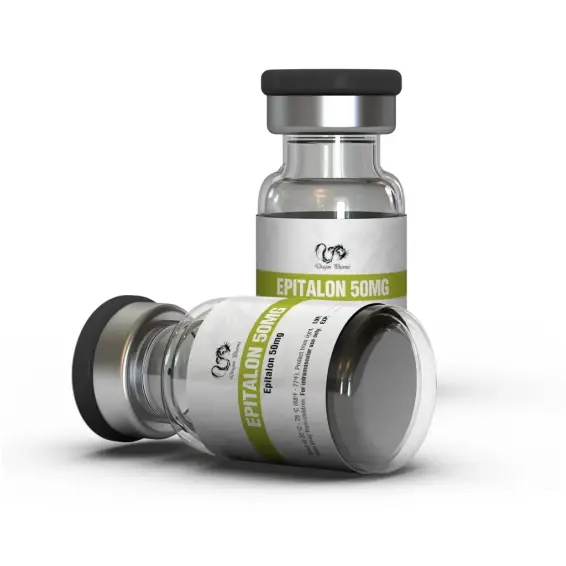
Epitalon (also spelled Epithalon) is Dragon Pharma's formulation of the synthetic tetrapeptide Ala-Glu-Asp-Gly at 50mg per vial — the most extensively researched anti-aging peptide in Russian longevity science, developed at the St. Petersburg Institute of Bioregulation and Gerontology. Its primary mechanism — telomerase activation — is unique among all peptides in the Dragon Pharma range and distinguishes it fundamentally from GH secretagogues, recovery peptides and metabolic compounds.
Also searched as: Epitalon 50mg, Epithalon peptide, Ala-Glu-Asp-Gly, anti-aging tetrapeptide, Epitalon Dragon Pharma.
What Epitalon Is — Origin and Development
Epitalon's origin is distinct from virtually every other peptide in use today and a genuine information gap in competitor content:
- Epitalon was developed by Professor Vladimir Khavinson and colleagues at the St. Petersburg Institute of Bioregulation and Gerontology, beginning in the 1980s under Soviet-era research programmes into biological age reversal
- It is a synthetic analogue of Epithalamin — a polypeptide extract derived from the bovine pineal gland, which was found to have significant life-extending properties in animal research. Rather than using the crude extract, researchers isolated the active tetrapeptide sequence: Alanine-Glutamic Acid-Aspartic Acid-Glycine (Ala-Glu-Asp-Gly)
- The tetrapeptide form (Epitalon) was synthesised specifically to allow consistent, pure dosing of the active component — and to enable the large-scale human studies that crude extract preparations could not practically support
- Over 40 years of research from Khavinson's institute has produced more published human and animal data on Epitalon than on most other longevity peptides combined — though the research remains largely in Russian literature and is underrepresented in Western content
The Telomerase Mechanism — Why It Is Unique
Epitalon's mechanism is unlike any other peptide in common use — a distinction virtually absent from competitor descriptions:
- Telomeres are repetitive DNA sequences at the ends of chromosomes that shorten with each cell division — telomere shortening is a primary cellular mechanism of biological aging and is directly linked to cellular senescence and age-related disease
- Telomerase is the enzyme that adds telomere sequence back onto chromosome ends — in most adult somatic cells, telomerase activity is suppressed, meaning each division shortens telomeres further without repair
- Epitalon has been shown in multiple studies (Khavinson et al., 2003, Bulletin of Experimental Biology and Medicine) to activate telomerase in human somatic cells — specifically in fetal fibroblasts and retinal pigment epithelial cells — restoring some degree of telomere lengthening capacity
- This mechanism is fundamentally different from all other peptides in the Dragon Pharma range: BPC-157 and TB-500 target tissue repair; GH secretagogues target the pituitary axis; Tirzepatide targets metabolic receptors. Epitalon targets the fundamental cellular aging mechanism at the chromosomal level
Key Research Data
| Study | Model | Key Finding |
|---|---|---|
| Khavinson et al., 2003 | Human cell culture (fibroblasts) | Epitalon activated telomerase; increased telomere length in treated cells vs controls |
| Anisimov et al., 2003 | Female mice (SHR strain) | Epitalon-treated group showed 33% increase in maximum lifespan; reduced tumour incidence |
| Khavinson et al., 2014 | Human clinical (elderly patients, 20-year follow-up) | Peptide bioregulator treatment group showed significantly lower mortality rates over 20 years vs untreated age-matched controls |
| Vinogradova et al., 2007 | Female rats | Epitalon restored disrupted circadian rhythms and melatonin production in aged animals |
Melatonin Production — The Pineal Gland Connection
Epitalon's origin as a pineal gland peptide has a specific functional consequence:
- The pineal gland produces melatonin — the primary circadian rhythm regulator. Melatonin production declines significantly with age, contributing to disrupted sleep, circadian dysregulation and multiple downstream aging effects
- Epitalon has demonstrated restoration of melatonin production in aged animals where age-related pineal decline had reduced melatonin levels — reflecting its action on the pineal gland from which its parent compound was extracted
- Improved melatonin production from Epitalon translates to improved sleep quality, circadian rhythm restoration and the associated downstream benefits (immune function, cortisol regulation, cellular repair during sleep) that melatonin coordinates
Effects and Benefits
- Telomerase activation — the only commonly available compound with documented telomerase-activating properties in human somatic cells
- Pineal gland support with restoration of melatonin production — improved sleep quality and circadian rhythm regulation
- Anti-tumor properties demonstrated in animal studies — reduced tumour incidence in Epitalon-treated cohorts
- Improved antioxidant defence — documented increase in superoxide dismutase and other antioxidant enzyme activity
- No suppression of natural testosterone — does not require Post Cycle Therapy
Dosage and Administration
| Protocol | Daily Dose | Duration | Frequency |
|---|---|---|---|
| Standard course | 5–10 mg/day | 10–20 days | 1–2 courses per year |
| Low-dose maintenance | 2–5 mg/day | 10 days | Quarterly |
Unlike daily-use peptides such as GH secretagogues or recovery compounds, Epitalon is typically used in defined courses of 10-20 consecutive days rather than ongoing daily administration. This course-based approach mirrors the research protocols and reflects Epitalon's mechanism — telomerase activation and cellular signalling effects that persist beyond the active dosing period. At 50mg per vial and 5mg/day, a single vial provides 10 days of standard dosing. Reconstitute with bacteriostatic water; inject subcutaneously once daily, preferably in the evening given the pineal/melatonin connection.
Epitalon vs Other Anti-Aging Peptides in the Dragon Pharma Range
| Compound | Primary Mechanism | Unique Contribution |
|---|---|---|
| Epitalon | Telomerase activation; pineal gland support | Only compound targeting telomere length — fundamental cellular aging mechanism |
| Dragontropin (HGH) | IGF-1 elevation; metabolic acceleration | Body recomposition; connective tissue; functional aging effects |
| Sermorelin | GH secretagogue — pituitary stimulation | Most physiological GH support; sleep quality via nocturnal pulse |
| GHK-Cu | Collagen synthesis; TGF-β; antioxidant | Skin regeneration; extracellular matrix remodelling |
Reconstitution and Storage
Reconstitute with bacteriostatic water — add slowly along the vial wall and swirl gently. Store reconstituted vial refrigerated at 2-8°C for up to 28-30 days. Never freeze. Evening injection is preferred given Epitalon's melatonin-related mechanism and the circadian timing of pineal activity.
"Epitalon is the only peptide in our range with documented telomerase-activating properties in human somatic cells — developed from 40+ years of Russian longevity research into the synthetic tetrapeptide that preserves the active sequence of the pineal gland's own anti-aging extract."
Stacking and Related Compounds
- Sermorelin or Ipamorelin for GH secretagogue support alongside Epitalon's cellular aging approach
- GHK-Cu for collagen remodelling and skin support alongside Epitalon's telomere biology
- BPC-157 for tissue repair support — complementary recovery mechanism alongside longevity protocols