Kisspeptin (Metastin) — GPR54 Master HPG Regulator by Dragon Pharma
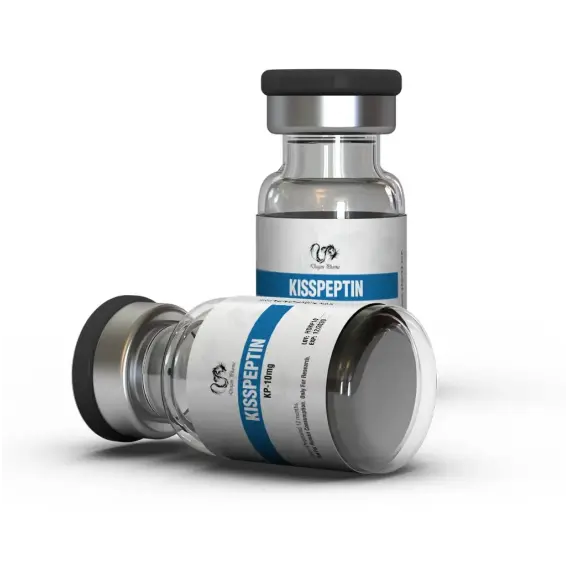
Kisspeptin (Metastin, KP-10) is Dragon Pharma's formulation of the hypothalamic neuropeptide master regulator of the HPG axis at 10mg per vial — the upstream controller of GnRH pulsatility that sits at the very top of the hormonal cascade governing testosterone production. Unlike Clomid or HCG which act at the pituitary or testes respectively, Kisspeptin acts at the hypothalamic level — the deepest and most fundamental point of HPG axis intervention, above GnRH itself. Understanding Kisspeptin requires understanding the critical distinction between pulsatile and continuous administration: the same peptide that stimulates GnRH release in pulses will suppress it with continuous exposure — making timing and frequency the defining variables in any Kisspeptin protocol.
Also searched as: Kisspeptin 10mg, Metastin, KP-10, Kisspeptin HPTA restart, GPR54 peptide, Kisspeptin Dragon Pharma.
Kisspeptin's Position in the HPG Axis — Above GnRH
Understanding where Kisspeptin sits in the hormonal hierarchy is the essential starting point:
- The HPG (Hypothalamic-Pituitary-Gonadal) axis functions as a cascade: the hypothalamus releases GnRH (Gonadotropin-Releasing Hormone) in pulses → GnRH stimulates the pituitary to release LH and FSH → LH stimulates Leydig cells to produce testosterone → testosterone provides negative feedback to hypothalamus and pituitary, completing the loop
- AAS disrupt this cascade at the hypothalamus/pituitary level — supraphysiological androgens provide negative feedback that shuts down GnRH, LH and FSH production
- Kisspeptin sits above GnRH in this hierarchy — Kisspeptin neurons in the arcuate nucleus and anteroventral periventricular nucleus of the hypothalamus receive signals from sex steroids, energy status (leptin, insulin), and circadian inputs, and integrate these to produce pulsatile GnRH release
- Kisspeptin is the master switch for GnRH pulsatility. Without Kisspeptin signalling at GPR54 (KISS1R) receptors on GnRH neurons, GnRH neurons are silent. With Kisspeptin stimulation, they fire in a pulsatile pattern that drives the entire downstream cascade
The Paradox — Why Pulsatile vs Continuous Matters Critically
This is the most important and most consistently omitted practical information about Kisspeptin:
- GPR54 (KISS1R) — the receptor through which Kisspeptin acts on GnRH neurons — undergoes rapid desensitisation with continuous ligand exposure. This is a general property of G-protein coupled receptors: sustained agonist exposure causes receptor internalisation and downstream signalling attenuation
- Pulsatile Kisspeptin (brief exposures separated by intervals ≥60-90 minutes) → GPR54 receptor activates → GnRH released → LH and FSH pulse → testosterone production. Receptor recovers between pulses
- Continuous Kisspeptin (sustained infusion or frequent injections without recovery intervals) → GPR54 desensitises → GnRH neurons silenced → LH and FSH suppressed → testosterone falls. The same peptide becomes suppressive
- This paradox has been demonstrated in human clinical studies: continuous IV Kisspeptin infusion in healthy men suppressed LH and testosterone; pulsatile subcutaneous Kisspeptin injections 90 minutes apart increased LH pulsatility and testosterone
- Practical protocol implication: Kisspeptin injections must be separated by sufficient interval (minimum 60-90 minutes, ideally 2-4 hours) for receptor recovery between pulses. Daily injections closer than this spacing produce desensitisation and suppression rather than stimulation
Kisspeptin vs SERM vs HCG — HPG Axis Restart Comparison
| Agent | Level of Action | Mechanism | Advantage |
|---|---|---|---|
| Kisspeptin | Hypothalamus — above GnRH | GPR54 stimulation → pulsatile GnRH release | Deepest axis intervention; most physiological restart point |
| Clomid / Nolvadex | Hypothalamus and pituitary | ER blockade → removes estrogen negative feedback → GnRH/LH increase | Oral; well-established PCT protocol |
| HCG | Testes (Leydig cells) | LH mimetic → direct Leydig cell testosterone stimulation | Bypasses HPG axis; maintains testicular function regardless of axis status |
| Enclomiphene | Hypothalamus and pituitary | Selective ER blockade (without zuclomiphene); cleaner than Clomid | Less side effects than Clomid; pituitary-level action |
HPTA Restart — The Kisspeptin Application for Post-AAS Recovery
Kisspeptin's most discussed AAS-specific application is HPTA (Hypothalamic-Pituitary-Testicular Axis) restart in cases where SERMs and HCG alone have not fully restored function:
- Standard PCT (SERMs ± HCG) works for most users because it removes the negative feedback (SERM) and maintains testicular function (HCG), allowing the hypothalamus to gradually resume GnRH pulsatility naturally
- In cases of prolonged, severe HPG suppression — long heavy cycles, repeated cycles without adequate recovery, or cases where standard PCT has not restored function — the GnRH neuronal network itself may require direct stimulation to reactivate kisspeptin-GnRH pulsatility
- Pulsatile Kisspeptin administration in this context provides direct GPR54 stimulation of GnRH neurons — effectively "reminding" them to fire — potentially accelerating or completing HPTA recovery where the axis is functionally quiescent rather than just suppressed
- Research in men with idiopathic hypogonadotropic hypogonadism (IHH — a condition where the hypothalamus fails to generate adequate GnRH pulses) has shown that pulsatile Kisspeptin administration can restore LH pulsatility and testosterone in some patients — providing the closest human analogue to post-AAS HPTA restart
Effects and Benefits
- Pulsatile GnRH stimulation — the most upstream HPG axis intervention available
- LH and FSH increase — downstream of GnRH stimulation; restores gonadotropin pulsatility
- Testosterone recovery — via restored LH → Leydig cell stimulation; endogenous, physiological testosterone production
- HPTA restart potential — for cases where conventional PCT has not fully restored axis function
- Libido enhancement — Kisspeptin has direct central effects on sexual motivation beyond its GnRH-stimulating role
- No HPG axis suppression from Kisspeptin itself — when used correctly (pulsatile), it stimulates rather than suppresses
Dosage and Administration
| Protocol | Dose | Frequency | Critical Timing |
|---|---|---|---|
| Pulsatile stimulation | 50–100 mcg | 2–3 pulses daily | Minimum 90 minutes between injections |
| HPTA restart | 100 mcg | Every 90–120 minutes (2–3× daily) | Do not dose more frequently — desensitisation reverses benefit |
At 10mg per vial and 100mcg per injection 2× daily, one vial provides 50 days of dosing — excellent value for longer HPTA recovery courses. The short ~28-34 minute half-life means each pulse is brief and receptor recovery occurs between injections when spaced correctly. Reconstitute with bacteriostatic water. Store reconstituted vial refrigerated at 2-8°C for up to 28 days.
Side Effects
- Minimal when used correctly (pulsatile) — Kisspeptin in appropriate pulses activates natural hormonal cascades rather than pharmacologically overriding them
- Hot flushes — from LH/testosterone surges after each pulse; typically mild and transient
- Desensitisation if dosed too frequently — the central safety concern; following pulsatile dosing guidelines is essential
- No exogenous testosterone suppression — does not add exogenous hormones; stimulates endogenous production
PCT and Protocol Context
- Clomid — can be combined with pulsatile Kisspeptin for comprehensive HPG axis stimulation at multiple levels simultaneously: Kisspeptin at hypothalamic level above GnRH, Clomid at estrogen receptor level removing negative feedback
- Nolvadex — same combination rationale; SERM + Kisspeptin covers two complementary mechanisms for HPTA restart
- HCG — testes-level stimulation alongside Kisspeptin's hypothalamic level support; complete axis coverage from hypothalamus (Kisspeptin) through pituitary (stimulated by recovered GnRH) to testes (HCG)
"Kisspeptin is the deepest HPG axis intervention available — it acts above GnRH itself, where Clomid and HCG cannot reach. The same peptide stimulates or suppresses GnRH depending entirely on whether it is given in pulses or continuously — making the 90-minute minimum interval between doses the most critical protocol variable."
Storage and Handling
Reconstitute with bacteriostatic water. Store reconstituted vial refrigerated at 2-8°C for up to 28 days. Never freeze.