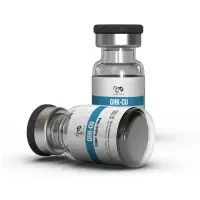
GHK-Cu — Copper Tripeptide-1 by Dragon Pharma
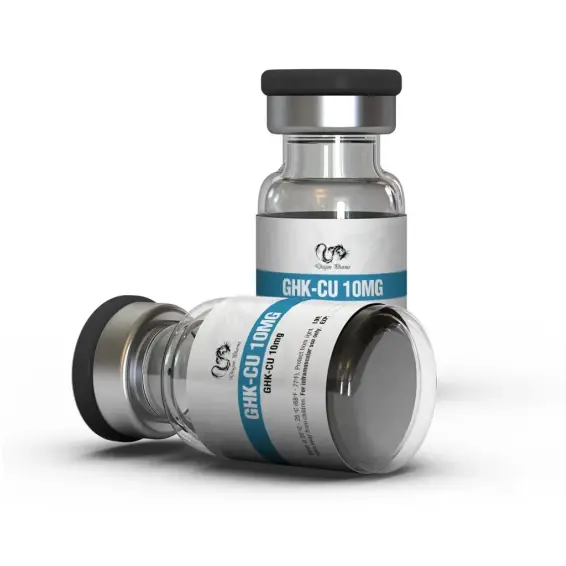
GHK-Cu is Dragon Pharma's formulation of Copper Tripeptide-1 (Glycyl-L-Histidyl-L-Lysine complexed with copper) at 10mg per vial — a naturally occurring tripeptide found in human plasma that becomes one of the most studied and potent peptides for skin regeneration, wound healing and systemic gene regulation. Its biological activity at concentrations as low as 1 nanomolar makes it among the most potent naturally occurring signalling peptides by molar concentration.
Also searched as: GHK-Cu copper peptide, Glycyl-L-Histidyl-L-Lysine copper, GHK-Cu 10mg, copper tripeptide-1 Dragon Pharma.
What GHK-Cu Is — Origin and Natural Role
GHK-Cu (Glycyl-L-Histidyl-L-Lysine-Cu²⁺) is a tripeptide naturally present in human plasma, saliva and urine. Its plasma concentration declines significantly with age:
- At age 20: plasma GHK-Cu approximately 200 nanograms/ml
- At age 60: plasma GHK-Cu approximately 80 nanograms/ml — a 60% decline
- This age-related decline correlates temporally with reduced skin collagen production, impaired wound healing and reduced antioxidant capacity — supporting the hypothesis that GHK-Cu decline is functionally linked to aspects of biological aging
GHK-Cu was first isolated by Loren Pickart in 1973 from human plasma albumin, and subsequent decades of research have established it as one of the most biologically active naturally occurring peptides, with influence extending well beyond the skin to systemic gene regulation.
The Nanomolar Potency — Why Concentration Matters
GHK-Cu's activity at 1 nanomolar concentration is a key information gap in competitor content:
- 1 nanomolar = 0.000001 mg/ml — an extraordinarily low concentration for meaningful biological activity
- For reference: most amino acid supplements are dosed in gram quantities; most peptide hormones are effective at microgram concentrations; GHK-Cu is biologically active at nanomolar concentrations — three orders of magnitude lower than microgram-level compounds
- This extreme potency means that even the small amounts of GHK-Cu delivered by the 10mg vial are far above the threshold for biological activity in tissue
- It also explains why GHK-Cu is included at useful concentrations in multi-peptide blends like the Klow Blend — a small absolute mass can produce meaningful effects
The Gene Regulation Discovery — Beyond Skin
The most significant and least-known aspect of GHK-Cu — a genuine information gap across virtually all competitor content:
- A 2012 analysis by Loren Pickart and colleagues, using gene chip microarray technology, identified that GHK-Cu modulates the expression of over 4,000 human genes — approximately 31% of all expressed human genes
- The genes affected include pathways governing inflammation, tissue remodelling, DNA repair, antioxidant defence, angiogenesis and nervous system function
- Key findings: GHK-Cu upregulates anti-inflammatory and tissue repair genes while downregulating genes associated with tumour progression, inflammation and fibrosis
- This systemic gene regulatory activity reframes GHK-Cu from a "skin peptide" into a broader biological repair and rejuvenation signal — explaining its effects beyond topical skin applications
Documented Mechanisms and Pathways
| Mechanism | Pathway | Effect |
|---|---|---|
| Collagen synthesis | TGF-β upregulation in fibroblasts | Increased collagen I and III production; improved skin structure and wound healing |
| Angiogenesis | VEGF upregulation | New blood vessel formation supporting tissue repair and nutrient delivery |
| Antioxidant defence | Superoxide dismutase (SOD) upregulation | Reduced oxidative stress in skin and other tissues |
| Hair follicle | Dermal papilla cell activation | Enlarged hair follicles; extended anagen phase; documented hair regrowth in animal and some human studies |
| Wound healing | Multiple growth factor signalling | Accelerated wound contraction and epithelialisation |
| Gene regulation | Epigenetic modulation of 4,000+ genes | Systemic shift toward repair and anti-inflammatory gene expression |
Effects and Benefits
- Collagen and elastin production — via TGF-β activation in fibroblasts; measurable improvements in skin thickness and elasticity documented in human studies
- Wound healing acceleration — one of the most clinically established applications; used in wound care products
- Hair follicle enlargement and anagen phase extension — documented in multiple studies; complementary to Minoxidil's KATP channel mechanism through a different pathway
- Antioxidant upregulation via SOD — reduced cellular oxidative stress
- Systemic gene regulation affecting repair, anti-inflammatory and rejuvenation pathways
- No suppression of natural testosterone — no PCT required
Dosage and Administration
| Protocol | Dose | Frequency | Notes |
|---|---|---|---|
| Skin and anti-aging | 1–2 mg/day | Daily or every other day | Subcutaneous, site of concern or general |
| Wound/injury focused | 2–3 mg/day | Daily near site | Localised subcutaneous or near wound |
At 10mg per vial and 1mg/day, a single vial provides 10 days of dosing. Given its nanomolar biological activity threshold, doses of 1-2mg/day provide concentrations substantially above the threshold for meaningful tissue response. Reconstitute with bacteriostatic water; store refrigerated at 2-8°C after reconstitution for up to 28-30 days. For larger protocols requiring 50mg total, Dragon Pharma also offers the GHK-Cu 50mg vial.
GHK-Cu vs Other Skin and Anti-Aging Peptides
| Compound | Primary Mechanism | Unique Contribution |
|---|---|---|
| GHK-Cu | TGF-β collagen; SOD antioxidant; 4000+ gene regulation | Most broadly gene-regulatory skin/repair peptide; active at nanomolar concentration |
| Epitalon | Telomerase activation; pineal gland support | Cellular aging mechanism — telomere length; pineal/melatonin restoration |
| BPC-157 | GH receptor upregulation; VEGF angiogenesis | Localised tissue repair — tendons, gut; most potent for specific injury sites |
| Klow Blend | 4-pathway: BPC+TB500+KPV+GHK-Cu | Combines GHK-Cu's collagen with localised, systemic and immune pathways simultaneously |
Reconstitution and Storage
Reconstitute with bacteriostatic water — add slowly along the vial wall and swirl gently. Store reconstituted vial refrigerated at 2-8°C for up to 28-30 days. Never freeze.
"GHK-Cu is one of the most potent naturally occurring signalling peptides in the Dragon Pharma range by molar concentration — active at 1 nanomolar, and documented to modulate over 4,000 human genes toward repair, anti-inflammatory and rejuvenation expression patterns."
Stacking and Related Compounds
- Epitalon — telomere and pineal support alongside GHK-Cu's collagen and gene regulation for comprehensive anti-aging coverage
- BPC-157 — localised tissue repair alongside GHK-Cu's broader collagen and skin regeneration
- Minoxidil — for hair loss: complementary mechanisms (GHK-Cu's follicle enlargement via dermal papilla + Minoxidil's KATP channel anagen extension)